
Table of Contents
ToggleERP vs Traditional Business Software: Understanding the Difference
Many businesses start with standalone software solutions for accounting, inventory, sales, human resources, and procurement. While these applications may serve individual departments effectively, they often create operational silos that limit visibility, efficiency, and growth.
As organizations expand, managing disconnected systems becomes increasingly complex. This is where Enterprise Resource Planning (ERP) systems provide significant advantages.
ERP software integrates business functions into a single centralized platform, enabling organizations to streamline operations, improve data accuracy, and support strategic decision-making.
In this article, we compare ERP systems and traditional business software to help organizations determine which approach best supports long-term growth and digital transformation.

What Is Traditional Business Software?
Traditional business software refers to standalone applications designed to perform specific functions.
Examples include:
- Accounting software
- Inventory management systems
- Payroll applications
- CRM tools
- Procurement software
- HR management systems
Each application operates independently and often requires manual data transfer between departments.
Common Challenges of Traditional Software
Organizations using multiple standalone systems frequently encounter:
- Duplicate data entry
- Data inconsistencies
- Limited visibility across departments
- Reporting delays
- Higher administrative workload
- Integration challenges
- Increased operational costs
As business operations become more complex, these challenges can significantly impact productivity and decision-making.
What Is an ERP System?
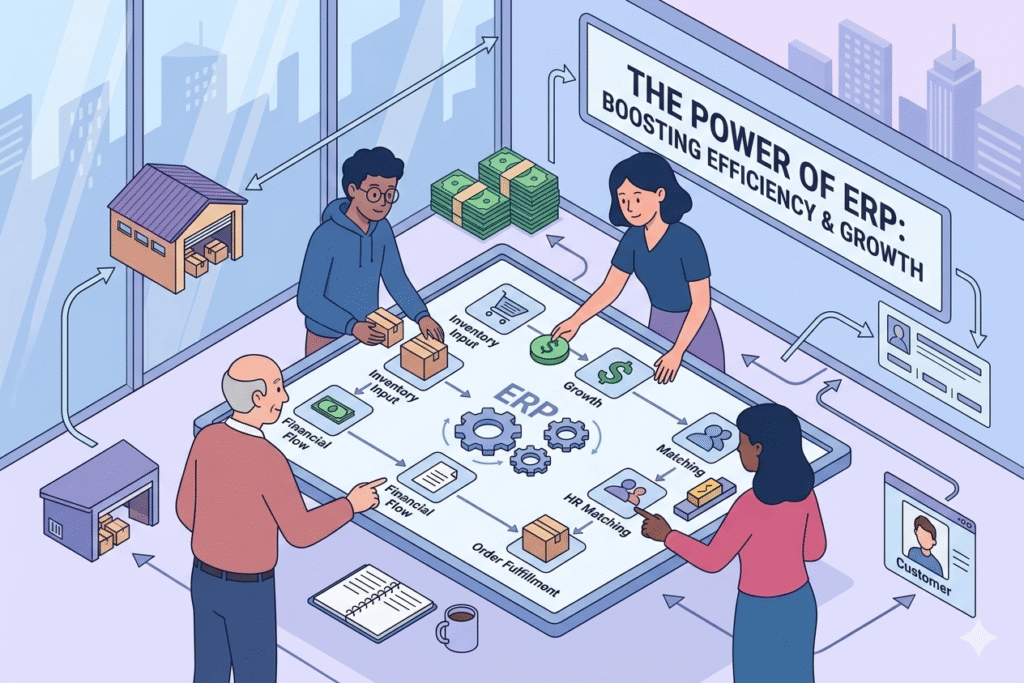
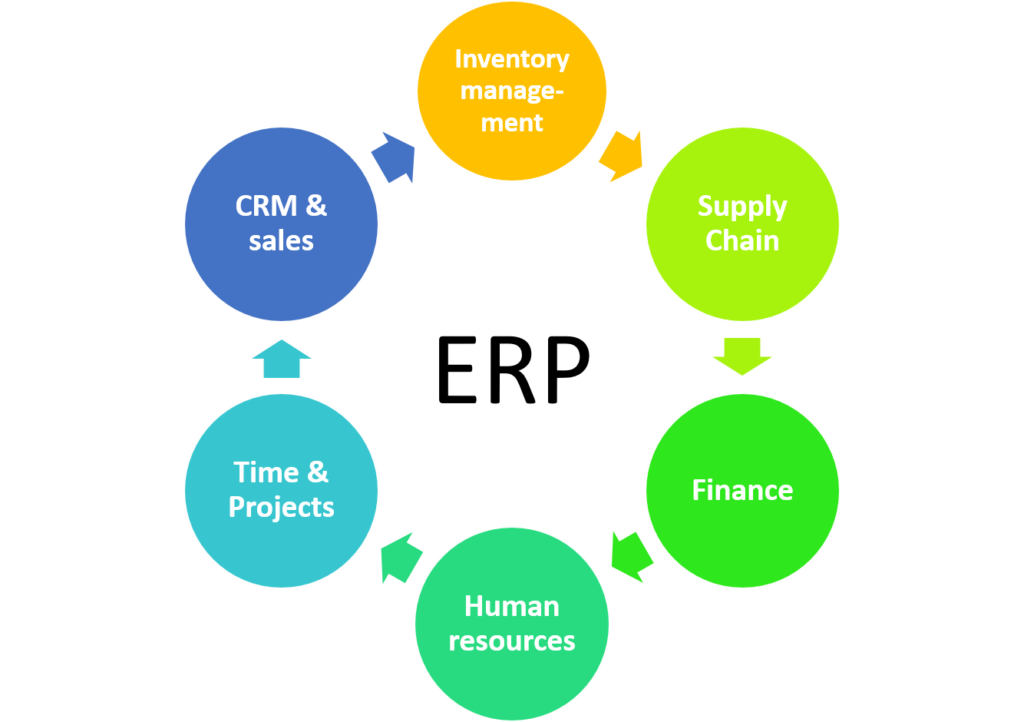
Enterprise Resource Planning (ERP) is an integrated software platform that connects critical business functions through a centralized database.
ERP systems typically include modules for:
- Finance and accounting
- Procurement
- Inventory management
- Sales and CRM
- Human resources
- Manufacturing
- Project management
- Supply chain management
Rather than operating in separate systems, all departments work from a single source of truth.
Organizations implementing ERP solutions gain real-time visibility into operations, helping management make faster and more informed decisions.
Learn more about BSIT’s ERP solutions: ERP Implementation Services
ERP vs Traditional Software
| Feature | Traditional Software | ERP System |
|---|---|---|
| Data Storage | Separate Databases | Centralized Database |
| Reporting | Manual Consolidation | Real-Time Reporting |
| Process Integration | Limited | Fully Integrated |
| Data Accuracy | Moderate | High |
| Automation | Minimal | Extensive |
| Scalability | Limited | High |
| Cross-Department Visibility | Low | Complete |
| Business Intelligence | Basic | Advanced |
Benefits of ERP for Saudi Businesses
Organizations across Saudi Arabia are accelerating digital transformation initiatives in alignment with Vision 2030.
ERP solutions help businesses:
- Improve operational efficiency
- Reduce manual processes
- Increase financial visibility
- Enhance compliance and governance
- Optimize inventory management
- Improve customer service
- Support business growth
- Enable data-driven decision-making
Industries benefiting from ERP implementation include:
- Manufacturing
- Construction
- Retail
- Trading and Distribution
- Healthcare
- Logistics
- Education
Explore how digital transformation initiatives can improve business performance: Digital Transformation Services
How BSIT Helps Organizations Implement ERP Successfully
Successful ERP implementation requires more than software deployment.
BSIT provides:
- ERP consulting and assessment
- Business process analysis
- ERP implementation services
- Data migration support
- User training
- System integration
- Post-implementation support
- Managed IT services
With local expertise and dedicated support across Saudi Arabia, BSIT helps organizations maximize the value of their ERP investments while minimizing implementation risks.
Learn more about our support services: Managed IT Services
When Should a Business Move to ERP?
Your organization may be ready for ERP if you experience:
- Frequent data duplication
- Reporting delays
- Inventory inaccuracies
- Lack of visibility across departments
- Growth-related operational challenges
- Multiple disconnected software applications
- Increasing compliance requirements
ERP becomes particularly valuable when business processes span multiple departments and require coordinated workflows.
Cloud ERP vs Traditional On-Premise Software
Modern ERP platforms are increasingly deployed in the cloud, offering additional benefits such as:
- Reduced infrastructure costs
- Remote accessibility
- Automatic updates
- Enhanced scalability
- Improved disaster recovery capabilities
Businesses considering cloud adoption can learn more about: Cloud Services and Solutions
Conclusion
While traditional business software may be sufficient for small operations, growing organizations often face challenges caused by disconnected systems and fragmented data.
ERP systems provide a unified platform that improves visibility, automates workflows, and supports long-term business growth.
For organizations seeking greater efficiency, improved decision-making, and scalable operations, ERP offers a strategic foundation for digital transformation.
If your business is evaluating ERP solutions, partnering with an experienced implementation provider can significantly improve project success and accelerate return on investment.
Contact BSIT to explore ERP solutions tailored to your industry and business objectives.