
Table of Contents
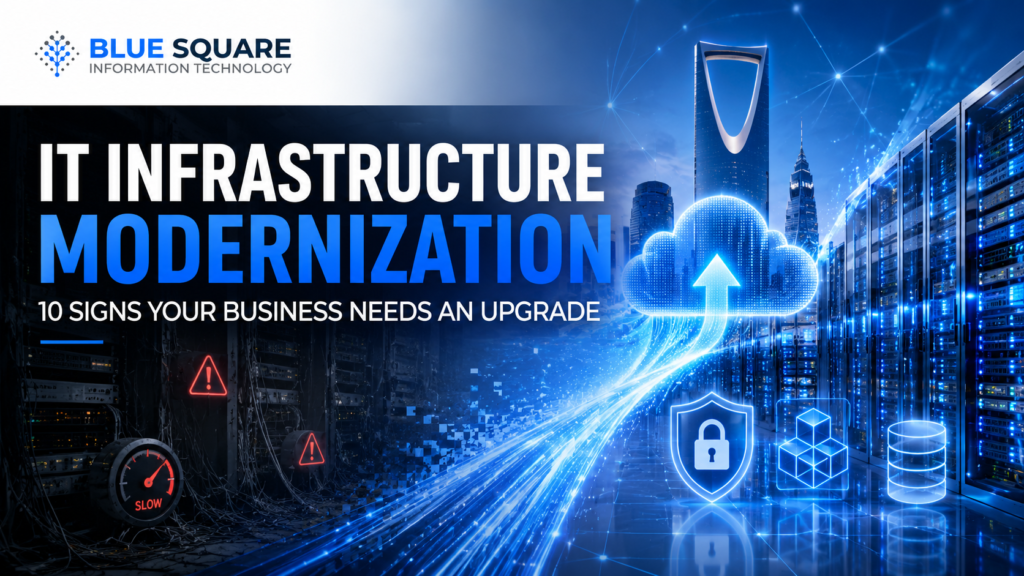
ToggleIT Infrastructure Modernization:
10 Signs Your Business Needs an Upgrade
Introduction
Your IT infrastructure is the foundation of every business operation. From enterprise applications and cloud platforms to cybersecurity, collaboration tools, and data storage, every critical business function depends on reliable infrastructure.
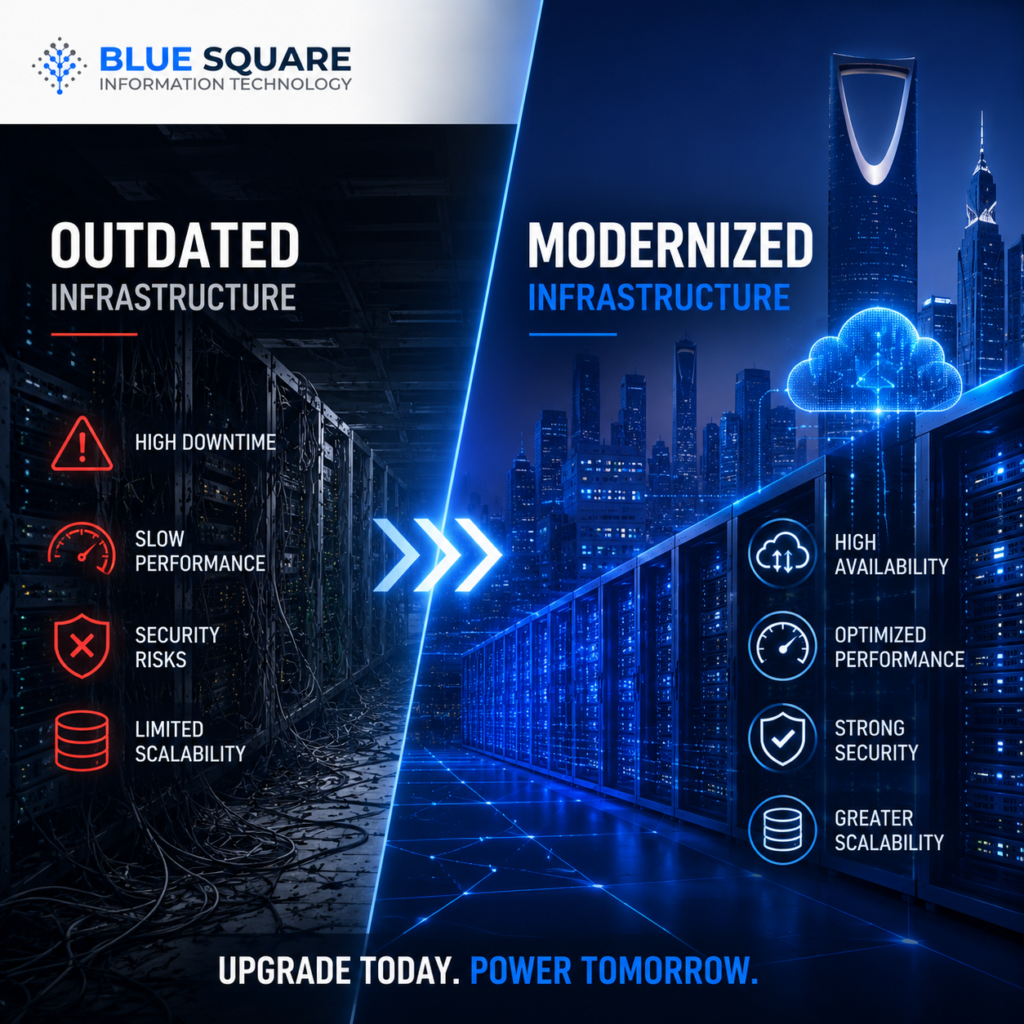
However, as technology evolves, aging infrastructure can become a major obstacle to business growth. Slow systems, frequent outages, increasing maintenance costs, cybersecurity risks, and limited scalability are all indicators that your technology environment may no longer meet modern business requirements.
IT Infrastructure Modernization helps organizations replace outdated systems with secure, scalable, and high-performance technologies that support digital transformation, business continuity, and long-term growth.
For organizations across Saudi Arabia, investing in modern infrastructure is no longer just an IT initiative—it is a strategic business decision.
What Is IT Infrastructure Modernization?
IT Infrastructure Modernization is the process of upgrading or replacing legacy hardware, software, networks, storage, and IT management systems with modern technologies that improve performance, security, reliability, and scalability.
Infrastructure modernization can include:
Server modernization
Network upgrades
Cloud integration
Storage modernization
Virtualization
Cybersecurity enhancements
Backup and disaster recovery improvements
Infrastructure monitoring and automation
The goal is to create an agile IT environment capable of supporting current business needs while preparing for future growth.
Why Modern Infrastructure Matters
Businesses today operate in an environment where speed, security, and availability directly influence customer satisfaction and operational efficiency.
Modern infrastructure enables organizations to:
Support digital transformation initiatives
Improve employee productivity
Strengthen cybersecurity
Enable hybrid work environments
Improve scalability
Enhance business continuity
Increase application performance
Reduce operational risks
Without modernization, legacy systems often become expensive to maintain and increasingly vulnerable to downtime and cyber threats.
10 Signs Your IT Infrastructure Needs Modernization
1. Frequent System Downtime
Unexpected outages interrupt business operations, reduce employee productivity, and negatively impact customer experience.
2. Slow Application Performance
If ERP systems, business applications, or databases respond slowly, outdated infrastructure may be limiting performance.
3. Rising Maintenance Costs
Older hardware often requires expensive maintenance and replacement parts, increasing the total cost of ownership.
4. Limited Scalability
Legacy infrastructure struggles to accommodate business growth, additional users, or increasing workloads.
5. Increasing Cybersecurity Risks
Unsupported operating systems and outdated hardware expose organizations to greater security vulnerabilities and compliance challenges.
6. Difficulty Supporting Cloud Applications
Modern cloud services require flexible, high-performance infrastructure capable of supporting hybrid and multi-cloud environments.
7. Backup and Disaster Recovery Issues
If backup processes are unreliable or recovery times are too long, your infrastructure may not adequately support business continuity.
8. Lack of Real-Time Monitoring
Without centralized monitoring, IT teams may struggle to identify and resolve infrastructure issues before they affect operations.
9. Remote Work Challenges
Employees require secure, reliable access to business applications from any location. Legacy infrastructure often limits remote productivity.
10. Digital Transformation Projects Are Delayed
Organizations adopting AI, analytics, ERP, automation, or cloud technologies often discover that outdated infrastructure cannot support modern workloads effectively.
Benefits of Modernizing IT Infrastructure
Investing in IT Infrastructure Modernization provides long-term business value by delivering:
Faster application performance
Greater system reliability
Improved cybersecurity
Reduced operational costs
Better cloud integration
Increased scalability
Enhanced business continuity
Improved employee productivity
Modern infrastructure also creates the technological foundation needed to adopt emerging technologies such as artificial intelligence, advanced analytics, automation, and Internet of Things (IoT) solutions.
How to Modernize IT Infrastructure Successfully
A successful modernization strategy typically includes:
1. Infrastructure Assessment
Evaluate current hardware, software, networks, workloads, and business requirements.
2. Modernization Roadmap
Prioritize upgrades based on business impact, budget, and operational requirements.
3. Cloud & Virtualization Planning
Identify opportunities to improve flexibility through cloud adoption and virtualization.
4. Security Enhancement
Implement modern cybersecurity controls, identity management, and continuous monitoring.
5. Deployment & Migration
Upgrade infrastructure while minimizing disruption to business operations.
6. Ongoing Optimization
Continuously monitor infrastructure performance, security, and capacity to support future growth.
According to the U.S. National Institute of Standards and Technology (NIST), organizations should continuously manage and modernize IT systems by implementing secure architectures, proactive risk management, and ongoing monitoring to maintain resilient and reliable information systems.
Why Choose BSIT Infrastructure Services?
Modern infrastructure requires more than hardware upgrades—it requires strategic planning, seamless integration, and proactive management. BSIT’s Infrastructure Services help organizations design, deploy, and optimize secure, scalable IT environments that support enterprise applications, cloud platforms, cybersecurity, and business continuity. From infrastructure assessments to implementation and ongoing support, BSIT enables businesses to modernize their technology foundation with confidence.
To deliver a complete infrastructure ecosystem, BSIT also provides Managed IT Services, Cloud Services, Database Services, and Business Continuity & Disaster Recovery (BCDR) solutions, helping organizations build resilient, high-performing IT environments aligned with long-term digital transformation goals.
Frequently Asked Questions
What is IT Infrastructure Modernization?
IT Infrastructure Modernization is the process of upgrading legacy IT systems, hardware, software, networks, and storage to improve security, performance, scalability, and business continuity.
Why is infrastructure modernization important?
Modern infrastructure improves application performance, strengthens cybersecurity, supports cloud adoption, reduces downtime, and enables organizations to scale more efficiently.
When should a business modernize its IT infrastructure?
Businesses should consider modernization when they experience frequent outages, slow systems, rising maintenance costs, security risks, or limitations in supporting digital transformation initiatives.