

Table of Contents
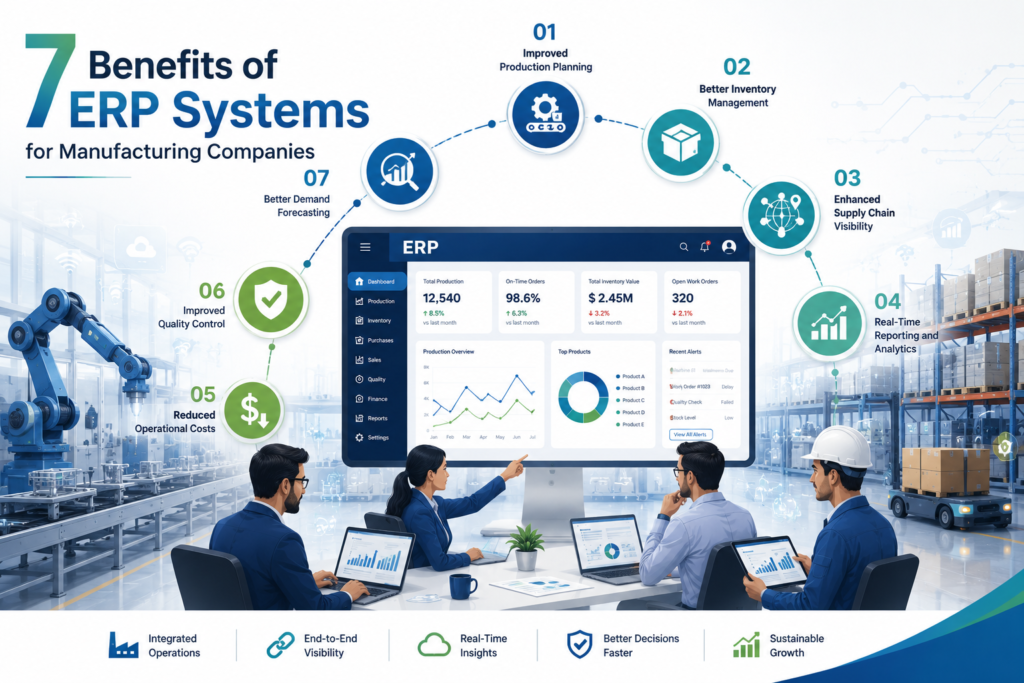
Toggle7 Benefits of ERP Systems for Manufacturing Companies
Manufacturing companies operate in a highly competitive environment where efficiency, inventory control, production planning, quality management, and cost optimization directly impact profitability. As operations grow, managing these processes through spreadsheets or disconnected software systems becomes increasingly difficult.
This is why many organizations are investing in ERP for Manufacturing Companies to streamline operations, improve visibility, and support long-term growth.
An Enterprise Resource Planning (ERP) system integrates critical business functions into a single platform, helping manufacturers make better decisions, reduce operational inefficiencies, and improve productivity across the organization.
In this article, we’ll explore the top benefits of ERP systems for manufacturing companies and why ERP has become a key driver of digital transformation in the manufacturing sector.
What Is ERP for Manufacturing Companies?
A manufacturing ERP system typically includes:
- Production Planning
- Inventory Management
- Procurement
- Supply Chain Management
- Sales and Order Processing
- Finance and Accounting
- Quality Control
- Human Resources
- Reporting and Analytics
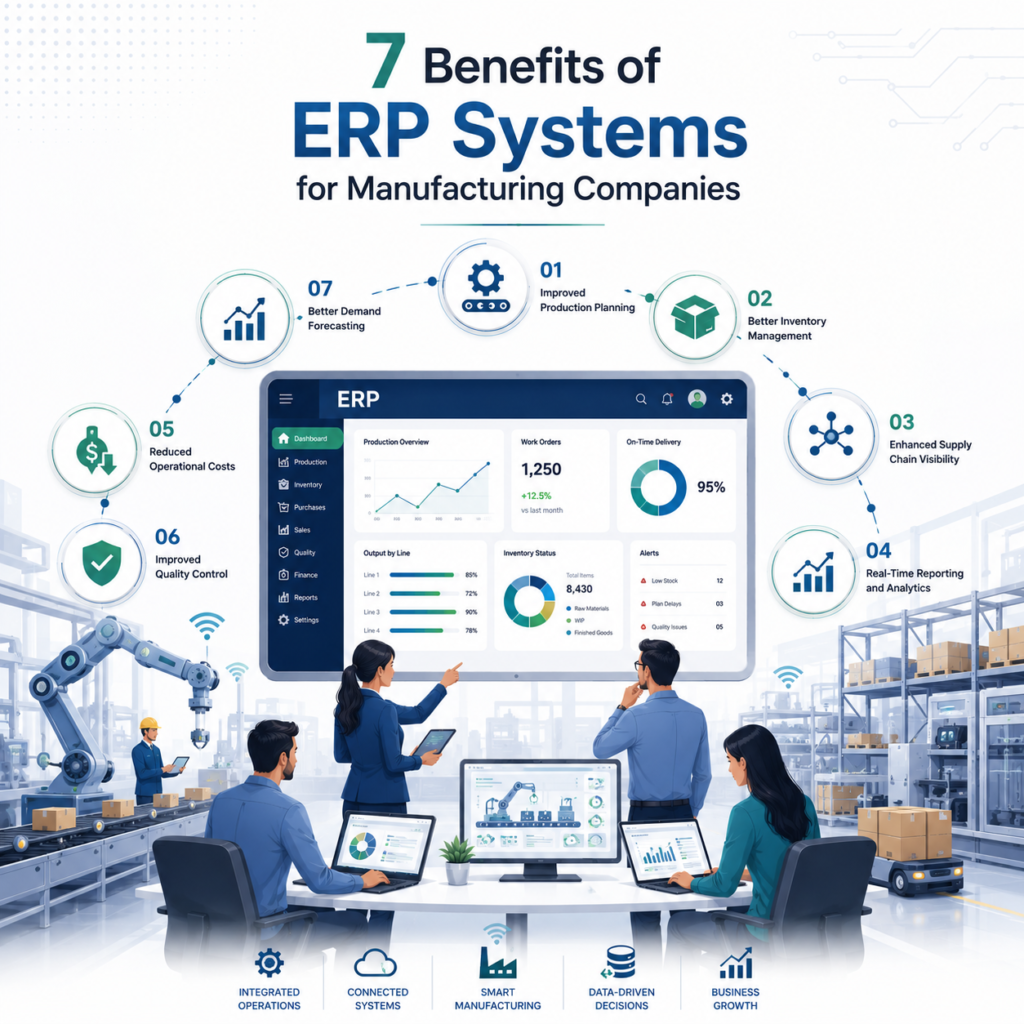
ERP for Manufacturing Companies refers to an integrated software solution designed to manage and automate core manufacturing processes.
Instead of using multiple standalone applications, manufacturers can manage operations through a centralized system that provides real-time visibility across departments.
Why Manufacturing Companies Need ERP Systems
Manufacturers often face challenges such as:
- Inventory inaccuracies
- Production delays
- Supply chain disruptions
- Manual data entry
- Limited reporting capabilities
- Rising operational costs
- Lack of real-time visibility
These issues can affect profitability, customer satisfaction, and business growth.
Implementing an ERP system helps address these challenges while improving overall operational performance.
Top Benefits of ERP Systems for Manufacturing Companies
1. Improved Production Planning
One of the biggest advantages of ERP for Manufacturing Companies is enhanced production planning.
ERP systems provide real-time insights into:
- Available inventory
- Production capacity
- Resource availability
- Customer demand
This allows manufacturers to create more accurate production schedules and avoid costly delays.
Benefits include:
- Reduced production bottlenecks
- Better resource utilization
- Improved delivery timelines
- Increased operational efficiency
2. Better Inventory Management
Inventory management is critical in manufacturing.
Excess inventory increases storage costs, while insufficient inventory can lead to production interruptions.
ERP systems help manufacturers:
- Track inventory in real time
- Monitor stock levels
- Automate reorder points
- Reduce stock shortages
- Improve inventory accuracy
With ERP, businesses gain greater control over raw materials, work-in-progress inventory, and finished goods.
3. Enhanced Supply Chain Visibility
Modern manufacturing depends on efficient supply chain management.
ERP systems provide visibility into:
- Supplier performance
- Purchase orders
- Shipment status
- Inventory movement
- Demand forecasts
This helps organizations identify potential disruptions and make proactive decisions.
Improved supply chain visibility leads to:
- Faster procurement
- Reduced delays
- Better supplier collaboration
- Lower operational risks
5. Reduced Operational Costs
Manufacturing leaders need accurate data to make informed decisions.
ERP systems provide real-time reporting across all departments.
Manufacturers can track:
- Production performance
- Inventory levels
- Financial metrics
- Sales trends
- Procurement activities
Instead of relying on outdated reports, decision-makers gain instant access to actionable insights.
5. Reduced Operational Costs
One of the primary reasons organizations invest in ERP for Manufacturing Companies is cost reduction.
ERP systems help reduce costs by:
- Eliminating duplicate data entry
- Automating manual processes
- Reducing inventory waste
- Improving production efficiency
- Minimizing procurement errors
Over time, these improvements contribute significantly to profitability.
6. Improved Quality Control
ERP systems help manufacturers establish consistent quality control processes through:
- Inspection tracking
- Quality checkpoints
- Defect monitoring
- Compliance documentation
Maintaining product quality is essential for customer satisfaction and regulatory compliance.
Benefits include:
- Reduced product defects
- Improved consistency
- Better compliance management
- Higher customer satisfaction
7. Better Demand Forecasting
Accurate forecasting helps manufacturers align production with market demand.
ERP systems analyze historical data and business trends to improve forecasting accuracy.
Benefits include:
- Reduced overproduction
- Lower inventory costs
- Improved production planning
- Better customer service
Forecast-driven manufacturing improves efficiency and reduces waste.
ERP and Manufacturing Digital Transformation
Manufacturing companies across Saudi Arabia are investing in digital transformation initiatives to improve competitiveness and operational efficiency.
ERP systems serve as the foundation for these initiatives by:
- Connecting departments
- Centralizing data
- Automating workflows
- Improving decision-making
- Supporting future technology adoption
For many manufacturers, ERP is the first step toward building a smarter and more connected operation.
Conclusion
Implementing ERP for Manufacturing Companies provides significant advantages, including improved production planning, inventory management, supply chain visibility, reporting, and cost control.
As manufacturers continue to embrace digital transformation, ERP systems have become essential tools for increasing efficiency, improving decision-making, and supporting long-term business growth.
Organizations that invest in the right ERP solution can gain a competitive advantage while building a scalable foundation for future success.